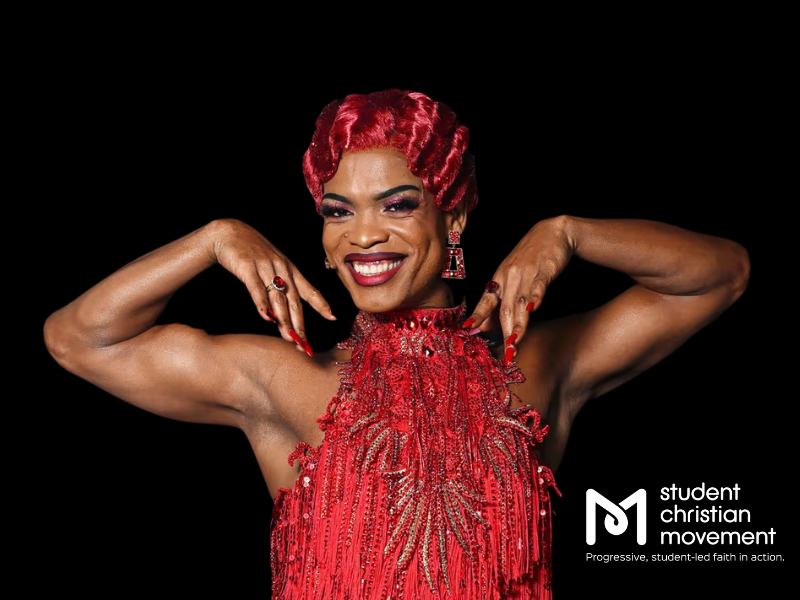
As part of our Lessons from the West End series, Soph explores the musical Kinky Boots, reflecting on the expectations we place on ourselves (and those placed upon us) while reminding us to celebrate who we are, unapologetically and triumphantly.
The musical adaptation of the 2005 movie ‘Kinky Boots’ premiered in 2012 in Chicago, and follows the same story; Charlie Price inherits his father’s shoe factory in Northampton after he passes away, but business is beginning to struggle. Charlie has a chance meeting with Lola, the headline drag queen of a local club, where Charlie and Lola (whose name out of drag is Simon) form an unlikely partnership in shoe making. Through the highs and lows of the process, we follow both Charlie and Lola in exploring their relationship, Charlie’s relationship with his girlfriend Nicola, and overcoming the challenges Lola faces from some of the factory workers. The musical culminates in a trip to Milan Fashion Week, where the ‘Kinky Boots’ that Charlie, Lola, and the factory team created together make it to the catwalk, and all challenges are overcome. Both Charlie and Lola face different challenges throughout the musical, but one thing they have in common is the expectations of their fathers.
Charlie, left with the ‘Price & Son’ shoe factory, is expected to take on the role his father left him, to ensure the future of the business, and the factory work force. Not only is he embroiled in grief from the loss of his father, he faces additional pressures to keep the factory turning, and from his girlfriend Nicola, who thinks it would be wise to sell the factory and live together in London. His frustrations continue to mount as factory staff remind him constantly of the types of decisions his father would have made, and how his father would never let staff go to reduce costs, or even consider selling the place. He is pressured to be his father. This pressure is exemplified when Lola joins Charlie at the factory. Making ‘Kinky Boots’ for Lola and their fellow performers, the Angels, seems like the start of a solution, but Charlie faces pushback from Don, one of the factory workers, about Lola, with Don going as far as challenging Lola to a boxing match to prove who’s a ‘real man’. Charlie lives in the shadow of his father’s legacy for most of the musical, struggling to manage the expectations of the staff with the desire to be his own person. It takes Lola, who is battling expectations of their own, to help Charlie work out who he is.
Lola, also known as Simon, is a Black drag queen working at a local club. The expectations placed on them are conveyed in the song ‘Not My Father’s Son’, performed by Lola as part of an in-drag performance at a local care home. The song explores how, growing up as Simon, it was expected of them to be just like their father. They tell the story of their childhood, and how they would do anything to be just like their father. They had boxing lessons to become strong and masculine, as this is what their father wanted for them. They continue, and explore how discovering drag made them feel powerful and was somewhere they could express who they really are, but also how this strained the relationship between Lola and their father. Lola loves to live out loud and be who they are, while their father would rather them just be a ‘normal man’. As Lola finishes the song, they turns to speak to her father, who is a resident of the care home she is performing at. Few words are said before Lola leaves.
Charlie and Lola have faced pressures to be just like their fathers or live up to their expectations, but both are happier living their lives true to themselves, sharing their talents and passions with those around them and with us, the audience. Both have to overcome the pressures placed on them by others too. This expectation of both parent and child is explored. As a young adult, I find myself seeing both sides. I am the child of my parents, but I also have family and friends with young children. Parents may have the feeling of ‘doing the best’ for their children. They want to set them up to be in the best position possible, as Charlie’s dad did for him by handing down the business to him, or the best for them based on social expectations, as Lola’s father did for them by trying to fit them into the traditional masculine roles. For their fathers, Charlie and Lola were being prepared for their futures. Charlie and Lola wanted to follow their own path, be allowed to make their own mistakes, discover who they are, and how they show themselves to the world. Charlie re-invents himself and the business with Lola’s help, and Lola realised they’re exactly the person they’re meant to be with Charlie’s help. Both of them children of fathers with high and specific expectations, but both adults who have become the people they were created to be. Amongst many things, ‘Kinky Boots’ teaches us that we are exactly the people we are meant to be, we are able to overcome hardship, to build community with those we may think we are unalike with, but most of all, we should celebrate being exactly who we are.
Written by Soph Day
Soph Day (she/they) is a PhD candidate at York St John University. Her research is exploring the role of Inclusive Church for LGBTQ+ people in the Church of England. Away from their thesis, Soph coaches American Football and enjoys café hopping in search of the perfect hot chocolate. Soph was SCM’s Faith in Action Project Worker 2024-25.